
Elephant Beach
Welcome to Elephant Beach
Adventure Meets Azure Waters
Located on Havelock Island, Elephant Beach is a hotspot for water sports and snorkeling. With shallow turquoise waters and vibrant coral reefs close to the shore, it’s perfect for both beginners and thrill-seekers. Accessible by boat or a short jungle trek, the beach offers stunning scenery and unforgettable underwater experiences.
Elephant Beach – A Tropical Paradise for Adventure and Relaxation
Located on the northeastern coast of Havelock Island (Swaraj Island), Elephant Beach is a stunning coastal destination that has become a must-visit spot for travelers exploring the Andaman Islands. Renowned for its pristine white sands, vibrant coral reefs, crystal-clear waters, and exciting water sports, Elephant Beach offers a perfect mix of adventure, relaxation, and natural beauty.
This article delves into the various aspects of Elephant Beach — its location, how to get there, natural features, activities, conservation efforts, and tips to make the most of your visit.
Location and Accessibility
Elephant Beach is situated on the northeastern shore of Havelock Island, about 5 kilometers from the main jetty area. It is part of the Ritchie’s Archipelago in the South Andaman district and lies within the marine national park zone, which helps preserve its rich marine ecosystem.
Proced to Elephant Beach
Visitors can access Elephant Beach by two primary routes:
- By Boat: The most popular and convenient way is by boat from the Havelock jetty. Regular glass-bottom boat rides operate throughout the day, taking about 15-20 minutes to reach the beach. The glass-bottom boats offer a fantastic opportunity to view underwater coral reefs and marine life en route.
- By Trekking: For adventure seekers, there is a jungle trail from Havelock village leading to Elephant Beach. The trek is approximately 3.5 kilometers through dense tropical forest and coastal paths. It takes about 1 to 1.5 hours depending on fitness and pace. The trek also offers beautiful views of the island’s flora and fauna.
The boat ride is preferred by most tourists due to convenience and time-saving, while the trek appeals to nature lovers and fitness enthusiasts who want to experience the island’s biodiversity up close.
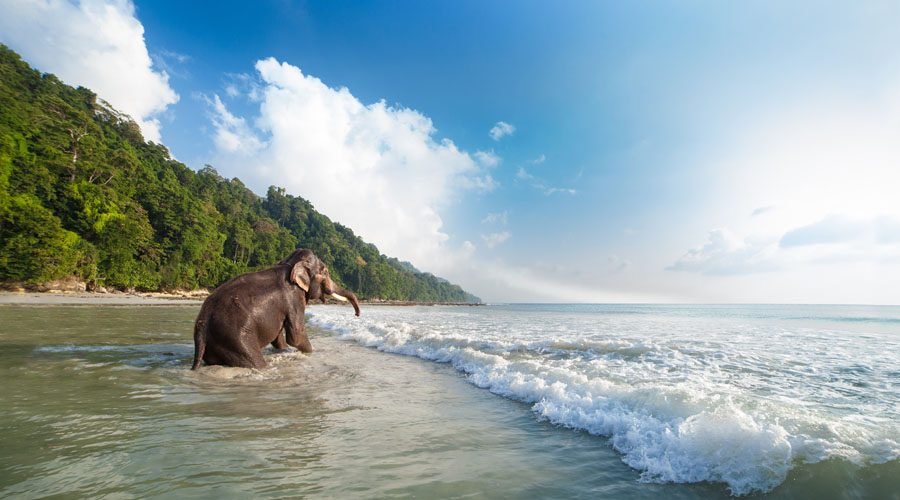
The Natural Beauty of Elephant Beach
Elephant Beach is renowned for its sandy shoreline, turquoise waters, and vibrant coral reefs that lie just offshore. Its scenic beauty and diverse marine life make it a top destination for snorkelers, divers, and beach lovers.
Pristine Sandy Shoreline
The beach features soft white sands that gently slope into the calm sea. The sand is clean, and the beach is surrounded by lush greenery, including coconut palms and tropical trees, providing a serene and picturesque environment.
Crystal-Clear Waters and Coral Reefs
Crystal-Clear Waters and Coral Reefs
The shallow waters at Elephant Beach are exceptionally clear, revealing colorful coral gardens below the surface. The reefs act as a natural barrier, protecting the beach from strong waves and creating calm lagoons ideal for swimming and snorkeling.
Marine Life at Elephant Beach
Elephant Beach is a vibrant underwater sanctuary, home to a wide variety of marine life, including:
- Colorful hard and soft corals that form the backbone of the reef ecosystem.
- Tropical fish species such as clownfish, parrotfish, angelfish, butterflyfish, and damselfish.
- Sea anemones, starfish, and sea cucumbers inhabiting the reef crevices.
- Occasional sightings of sea turtles and reef sharks, adding excitement to diving experiences.
- Crustaceans like shrimps and crabs among the coral branches.
The diversity of marine life makes Elephant Beach a fantastic site for snorkeling and beginner-level scuba diving.
Activities at Elephant Beach
Elephant Beach caters to a wide range of interests and activity levels. Some popular things to do include:
Snorkeling
Snorkeling is the most popular activity at Elephant Beach. The calm and clear waters enable visitors to float over the coral reefs and observe a kaleidoscope of colorful fish and marine creatures. Snorkeling gear is usually available for rent from local operators near the beach.
Scuba Diving
For those looking for a deeper underwater experience, Elephant Beach offers beginner-friendly dive sites with certified dive operators running courses and guided dives. Diving here provides an up-close look at the reefs, marine animals, and coral formations.
Glass-Bottom Boat Rides
If you prefer to stay dry, glass-bottom boats provide an excellent way to view the underwater world. The transparent hull allows visitors to see coral gardens, tropical fish, and marine fauna without getting wet.
Swimming and Sunbathing
The beach’s calm waters are perfect for swimming. Visitors can also relax on the sandy shore, sunbathe, and enjoy the tropical ambiance.
Jungle Trekking
The trek to Elephant Beach is an adventure in itself. Passing through dense forests, travelers can spot unique flora and fauna, tropical birds, and enjoy spectacular coastal views.
Water Sports
Besides snorkeling and diving, there are opportunities for kayaking, paddleboarding, and other water-based recreational activities organized by local tour operators.
Conservation and Environmental Importance
Elephant Beach lies within theprotected area aimed at conserving the fragile marine ecosystem of the Andamans. Conservation efforts include:
- Strict regulations on fishing and boating to prevent damage to coral reefs.
- Banning of plastic and non-biodegradable materials on the beach.
- Educating tourists on eco-friendly practices to minimize environmental footprints.
- Controlled visitor access to reduce human impact.
Visitors are encouraged to respect these guidelines to help preserve the natural beauty and biodiversity of Elephant Beach.
Accommodation and Facilities Near Elephant Beach
Havelock Island offers various accommodation options within easy reach of Elephant Beach:
Activities on Red Skin Island
- Luxury Resorts: High-end resorts provide premium facilities, private beach access, and guided activities.
- Mid-Range Hotels: Comfortable stays with good amenities and access to the beach.
- Budget Guesthouses and Hostels: For backpackers and solo travelers seeking affordable lodging.
Facilities near Elephant Beach itself are basic. Visitors should carry essentials like water, snacks, and sun protection. There are several cafes and restaurants in Havelock village, where most tourists stay.
Best Time to Visit Elephant Beach
The best months to visit Elephant Beach are from October to May, when the weather is dry, sunny, and the sea calm. During the monsoon season (June to September), heavy rains and rough seas can limit access and water activities.
Tips for a Great Visit to Elephant Beach
- Carry reef-safe sunscreen to protect your skin and the corals.
- Bring your own snorkeling gear if possible, though rentals are available.
- Arrive early to avoid crowds and enjoy the peaceful morning atmosphere.
- Avoid touching or stepping on corals to preserve the reef.
- Take all trash back with you to keep the beach clean.
- If trekking, wear comfortable shoes and carry water.
Elephant Beach and the surrounding marine park are integral to the Andaman Islands’ ecology and tourism. The coral reefs support fisheries, protect shorelines, and contribute to the island’s natural heritage.
The beach area also highlights the Andaman Islands’ cultural emphasis on nature conservation and sustainable tourism, crucial for the islands’ long-term ecological health.
Elephant Beach on Havelock Island is a tropical paradise that beautifully blends adventure and relaxation. Its stunning coral reefs, clear waters, and sandy shores make it a top choice for snorkeling, diving, and beachcombing.
Whether you arrive by glass-bottom boat or trek through the jungle, the experience is unforgettable. The vibrant marine life, peaceful ambiance, and natural beauty ensure that Elephant Beach remains a cherished destination for visitors to the Andaman Islands.
By following conservation guidelines and respecting this fragile environment, tourists can enjoy and help protect Elephant Beach for years to come.