
Cellular Jail Museum
Welcome to Cellular Jail Museum
A Tribute to India's Freedom Struggle
Located in Port Blair, the Cellular Jail, also known as Kala Pani, stands as a powerful reminder of India’s colonial past. Once a dreaded prison used by the British to exile political prisoners, it is now a national memorial. The museum showcases the sacrifices of freedom fighters through preserved cells, historical exhibits, and a stirring Light & Sound Show in the evening.
Cellular Jail Museum
The Cellular Jail, also known as Kala Pani, stands as a stark and poignant reminder of the sacrifices made by countless freedom fighters during the British colonial rule in India. Located in Port Blair, the capital city of the Andaman and Nicobar Islands, this historic prison complex is not only a symbol of oppression and endurance but also an important museum and national memorial that educates visitors about India’s independence struggle.The Cellular Jail Museum offers a compelling glimpse into the harsh realities faced by the inmates, the resilience of the human spirit, and the historical importance of the Andamans in the freedom movement.
Historical Significance of Cellular Jail
Constructed between 1896 and 1906 by the British colonial government, the Cellular Jail was designed to house political prisoners and revolutionaries from the mainland. The isolated location and the brutal conditions were intended to break the spirit of freedom fighters.
- The prison was called “Cellular” because of its unique architectural design comprising individual solitary confinement cells.
- The prison had seven wings, each radiating from a central tower, resembling a spoked wheel or panopticon, allowing guards to monitor all prisoners efficiently.
- At its peak, the jail housed over 700 inmates, many of whom were subjected to inhumane torture, forced labor, and solitary confinement.
- The Andaman Islands earned the name Kala Pani (Black Water) for this infamous jail, as it symbolized the isolation and hardship of the prisoners sent far away from the mainland.
Prominent revolutionaries such as Vinayak Damodar Savarkar, BatukeshwarDutt, Sukhdev Thapar, and many others were imprisoned here.
The Cellular Jail Museum – Exhibits and Experience
The Cellular Jail Museum is housed within the jail complex, providing an immersive historical experience that highlights the struggles and stories of the inmates.
Prison Cells and Solitary Confinement
- Visitors can see the original solitary cells where prisoners were kept in complete isolation.
- The cells are stark and cramped, often without ventilation or light, giving a real sense of the psychological and physical torment faced by inmates.
Location and Accessibility
- Location: Cellular Jail Complex, Port Blair, South Andaman District
- Distance from City Center: Approximately 3 km from Aberdeen Bazaar
- How to Reach: Easily accessible by road: taxis, auto-rickshaws, and guided tour buses frequently ply this route.
Visitors often include the Cellular Jail as a key stop in Port Blair’s sightseeing itinerary, combined with visits to nearby museums and beaches.
Architectural Layout and Features
The Cellular Jail is a masterpiece of colonial prison architecture designed for maximum security and prisoner isolation.
- The seven wings radiate from a central watchtower, each wing consisting of rows of solitary cells.
- Each cell measures approximately 4.5 feet by 8 feet, designed to prevent any communication between prisoners.
- The jail includes a central tower, guard rooms, workshops, kitchen, hospital, and exercise yards.
- The stone and brick walls were built to withstand tropical weather and deter escape attempts.
- The design allowed guards to observe prisoners at all times, emphasizing surveillance and control.
Today, the original structure stands preserved, with some wings restored for public viewing while others remain in ruins, conveying the oppressive environment endured by prisoners.
Torture Devices and Instruments
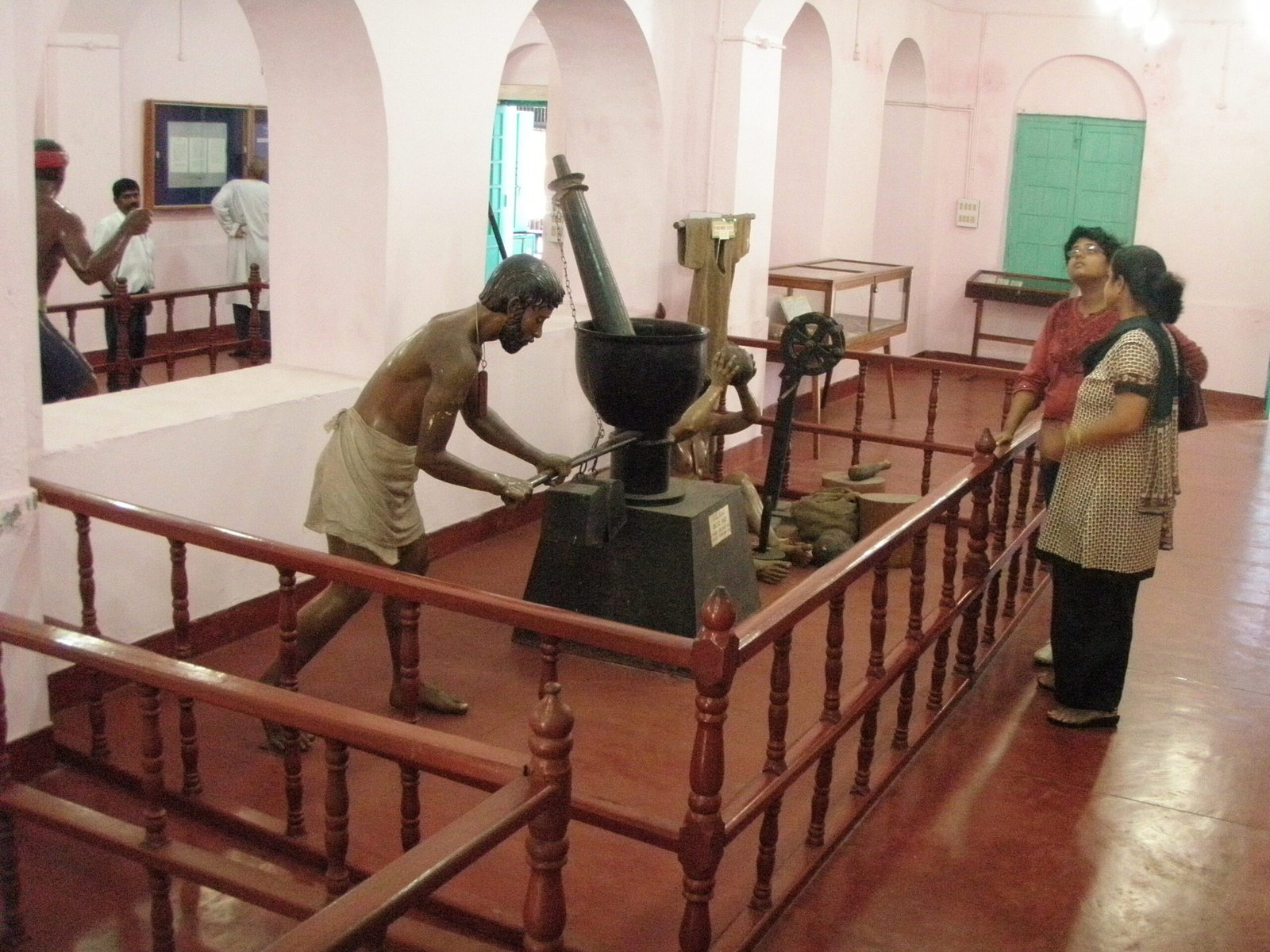
- The museum displays tools and devices used by British jailers to inflict punishment, including whips, chains, iron cuffs, and other cruel instruments.
- Graphic descriptions and photographs illustrate the brutal methods employed to break the prisoners' will.
Freedom Fighters’ Personal Effects
- Letters, diaries, manuscripts, and photographs of notable prisoners like Savarkar, Dutt, and others.
- These artifacts shed light on the prisoners’ resilience, patriotism, and their undying hope for freedom.
Historical Documents and Archives
- British government orders, jail records, and trial documents that outline the legal framework used to imprison revolutionaries.
- Audio-visual presentations recount the jail’s history and the Indian independence movement.
Martyrs’ Memorials
- Dedicated spaces honoring those who sacrificed their lives within the jail walls.
- Memorial plaques and portraits create a solemn atmosphere of remembrance.
Cellular Jail Light and Sound Show
One of the most compelling experiences at the Cellular Jail is the Light and Sound Show held every evening.
- The show narrates the history of the jail, highlighting key events of the freedom struggle.
- Dramatic storytelling combined with visual projections, sound effects, and theatrical lighting brings alive the stories of courage and sacrifice.
- It is conducted in English and Hindi, ensuring accessibility to diverse audiences.
- The show lasts approximately 45 minutes and is a must-watch for visitors to fully grasp the emotional weight of the place.
Educational and Cultural Importance
The Cellular Jail Museum serves as a vital educational center for visitors of all ages.
- It provides detailed insights into the colonial penal system and the harsh treatment meted out to political prisoners.
- Students and researchers visit to study the history of the Indian freedom movement and the specific role of the Andaman Islands.
- The museum promotes awareness about human rights, justice, and resilience.
- It acts as a symbol of the unbreakable spirit of Indian revolutionaries, inspiring future generations.
Visiting Information
- Timings: 9:00 AM to 5:00 PM daily (except certain national holidays)
- Light and Sound Show Timing: Usually 6:00 PM to 7:00 PM (timing may vary seasonally)
Visitors are advised to allocate at least 2 to 3 hours for a thorough visit, including the museum, prison wings, and light & sound show.
- Nearest Airport: Veer Savarkar International Airport, Port Blair
- Nearest Port:Haddo Wharf (ferry services connect to other islands)
- Accommodation: Numerous hotels, resorts, and guesthouses are available in Port Blair, ranging from budget to luxury.
Things to carry:
- Wear comfortable walking shoes as the complex is large and requires some walking.
- Carry water, especially during the hot and humid months.
- Photography is allowed in most areas but verify restrictions, especially inside the museum.
- Engage with guided tours for detailed historical narratives.
- Respect the solemnity of the site as it is a national memorial.
The Cellular Jail Museum in Port Blair is an essential destination for anyone visiting the Andaman Islands. It offers a powerful journey through India’s colonial past, illuminating the struggles faced by freedom fighters who were imprisoned in the harshest conditions. The combination of historical architecture, poignant exhibits, and the evocative Light and Sound Show makes it one of the most moving heritage sites in India.The Cellular Jail Museum is not just a tourist site but a national symbol of India’s freedom struggle and the indomitable courage of its people. It preserves the stories of sacrifice, pain, and patriotism, reminding visitors of the price paid for India’s independence.