
Mount Harriet National Park
Welcome to Mount Harriet National Park
A Scenic Retreat into Nature’s Heart
Mount Harriet National Park is a lush, green paradise and one of the most picturesque spots in the Andaman Islands. Home to the third highest peak in the archipelago, this protected area is rich in biodiversity, panoramic viewpoints, and cultural history.
Mount Harriet National Park
If there’s one place in the Andaman Islands where nature thrives untouched and panoramic landscapes inspire awe, it’s Mount Harriet National Park. Located in the South Andaman district, just 20 km from Port Blair, this breathtaking park is not only a sanctuary of rare biodiversity but also a historically significant location and a prime spot for eco-tourism.
Named after Harriet C. Tytler, the wife of a British officer and a passionate nature artist and photographer, the park is a blend of lush evergreen forests, endemic flora and fauna, colonial history, and panoramic views of the sea and surrounding islands. Covering an area of 46.62 square kilometers, it encompasses one of the highest points in the Andaman Islands – Mount Harriet Peak, rising to 383 meters.Whether you’re an avid trekker, wildlife photographer, birdwatcher, or nature enthusiast, Mount Harriet National Park offers a refreshing escape into a rich and diverse ecosystem.
Location & Accessibility
Mount Harriet National Park is located in Ferrargunj Tehsil, approximately 20 km by road and 10 km by sea from Port Blair. There are two main ways to reach the park:
Option 1: Via Bambooflat Jetty
- From Port Blair to Chatham Jetty
- Take a ferry to Bambooflat Jetty (15 minutes)
- From Bambooflat, drive or hire a cab to reach the park (~10 km uphill drive)
Option 2: By Road
- Drive from Port Blair via Corbyn’s Cove - Ferrargunj route
- The distance is 55 km and takes about 1.5 hours
- Less preferred due to longer travel time
Most tourists choose the ferry route for scenic views and convenience.
Popular Activities at Ross Island
- Historical Walks & Photography: Explore old ruins and colonial architecture enveloped by giant banyan trees.
- Light & Sound Show: Held in the evening, this show narrates the history of the island and the struggle for Indian independence.
- Wildlife Spotting: Spot deer, peacocks, and rabbits freely roaming the island.
- Nature Trails: Scenic walking paths surrounded by lush greenery.
- Picnics and Leisure: A peaceful spot for relaxation and nature appreciation.
Historical Significance
Mount Harriet was once the summer headquarters of the British Chief Commissioner during the colonial era. The area offered a cooler climate, clean air, and scenic views, which made it ideal for British officials escaping the heat of Port Blair.Interestingly, the park’s iconic landscape – a view of the lighthouse at North Bay Island from the hilltop – appears on the ₹20 Indian currency note. This adds a touch of national pride and curiosity for every traveler visiting the viewpoint.
Biodiversity and Wildlife
Mount Harriet National Park is one of the richest biodiversity hotspots in the Andaman Islands. Its lush evergreen and semi-evergreen forests are home to several endemic species of flora and fauna, some of which are found nowhere else in the world.
Flora
The park hosts dense forests, including species like:
Andaman padauk (national tree of Andaman), Clove, cinnamon, and other native medicinal plants, Bamboo groves and wild orchids, etc.
The vegetation ranges from tropical evergreen to moist deciduous, creating a complex ecosystem that supports diverse wildlife.
Fauna
Mount Harriet is home to:
- Andaman Wild Pig (endangered and endemic)
- Andaman Hill Myna (state bird)
- Saltwater Crocodiles (in nearby creeks)
- Monitor Lizards
- Hermit Crabs
- Barking Deer
- Civets and Squirrels
Birdwatching
A paradise for bird lovers, you can spot:
Andaman Woodpecker, Andaman Drongo, Collared Kingfisher, White-headed StarlingandAndaman Serpent Eagle.
Bring your binoculars and a camera—this park is one of the best places in the Andamans for birdwatching and wildlife photography.
Things to Do at Mount Harriet National Park
1. Trekking and Nature Trails
There are several trekking routes inside the park. The most popular trail is:
- Madhuban Trek (Mt. Harriet to Madhuban): ~16 km of forest trail
- Ideal for adventure seekers and nature lovers
- Offers sights of rare birds, butterflies, and reptiles
- Ends at Madhuban Beach, a secluded beach with mangroves and rock pools
Trekking Tip:
Start early in the morning, carry water, snacks, and wear trekking shoes.
2. Scenic Viewpoints
Climb to the Mount Harriet Viewpoint, where you’ll see:
- Panoramic views of North Bay Island
- The iconic ₹20 note landscape
- Distant views of Port Blair and Ross Island
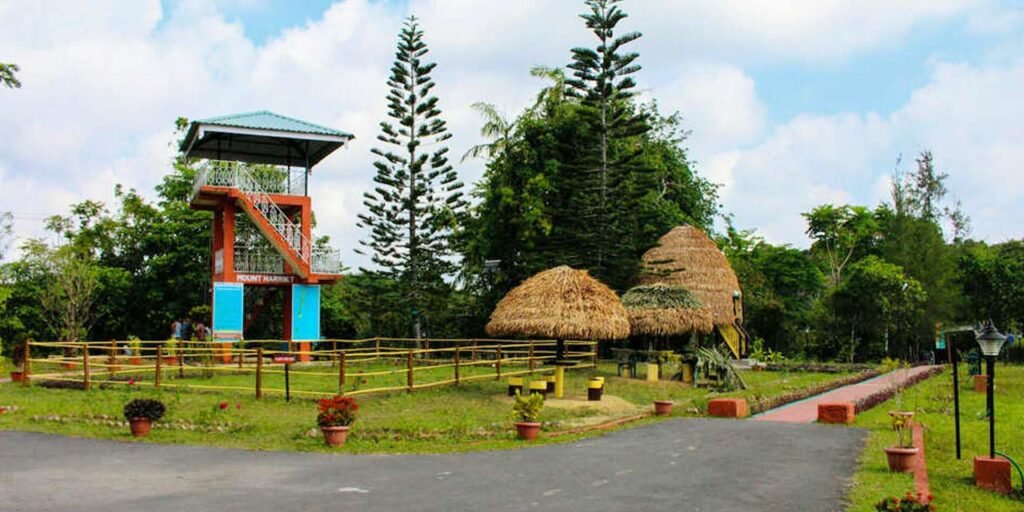
Benches and gazebos are set up for tourists to relax and enjoy the view.
3. Visit the Mount Harriet National Park Museum
A small interpretation center at the park’s entrance showcases:
- Photographs and models of wildlife
- Historical facts
- Flora and fauna found in the park
4. Camping and Picnics
Designated picnic areas and forest rest houses are available for those who want to spend more time surrounded by nature. The cool mountain air and peaceful ambiance make it ideal for family outings and nature lovers.
5. Sunset Photography
Capture magical sunsets from the Mount Harriet peak. The forested slopes glow golden as the sun dips into the Bay of Bengal, offering picture-perfect moments.
Ideal For
Mount Harriet National Park is perfect for:
- Families: Nature education, safe trails, picnic spots
- Couples: Scenic viewpoints, peaceful environment
- Birdwatchers and Wildlife Enthusiasts
- Adventure Seekers: Trekking and forest exploration
- Eco-tourists and Nature Lovers
Mount Harriet National Park is part of India’s protected areas and supports several conservation efforts.
- Plastic-free zone
- Strict forest protection laws
- Visitors are encouraged to follow eco-friendly practices like:
- No littering
- No smoking or campfires
- Avoid disturbing animals
- Stay on marked trails
The park’s management works to protect endemic and endangered species, and responsible tourism helps sustain its ecological balance.
Best Time to Visit
- Ideal Months: November to April
Best Time of Day
- Early morning: For birdwatching and trekking
- Late afternoon: For sunset views
Things to carry
- Wear light, breathable clothes and good walking shoes
- Carry water, snacks, and insect repellent
- Binoculars and camera are a must for wildlife and birdwatching
- If trekking to Madhuban, carry a daypack and hire a local guide
- Book forest rest houses in advance through the Forest Department
- Respect local customs and natural habitats
Services include:
- Full-day Mount Harriet tours
- Trekking arrangements
- Private cab rentals
- Forest guest house booking assistance
Environmental & Cultural Sensitivity
Baratang is not just about landscapes – it is home to the Jarawa Tribe, one of the oldest surviving Stone Age communities in the world. Their territory is strictly protected.
Don’t:
Take photographs, make gestures, or offer food/items – it is illegal and disrespectful
Baratang also has fragile mangrove ecosystems and sensitive biodiversity. Eco-friendly travel practices are essential.
Tour Planning & Permits
Organizing a trip to Baratang requires:
- Ferry bookings
- Vehicle passes
- Entry permissions for caves and reserve areas
For a hassle-free experience, book your trip with:
Services include:
- Private vehicle bookings
- Full-day and group tours
- Cave visit permits
- Local guides and interpreters
Sample Day Itinerary for Baratang
- 4:00 AM: Depart Port Blair via ATR
- 6:00 AM: Reach Jirkatang Check Post; join convoy
- 8:30 AM: Arrive at Baratang Jetty; cross to Baratang
- 9:00 AM: Visit Limestone Caves via boat and trek
- 11:30 AM: Head to Mud Volcano
- 1:00 PM: Lunch at local eatery or packed lunch
- 2:00 PM: Optional visit to Baludera Beach or relax at Jetty
- 3:30 PM: Parrot Island boat ride (sunset)
- 5:30 PM: Return to Port Blair (reach by 9 PM approx.)
Don’t:
Take photographs, make gestures, or offer food/items – it is illegal and disrespectful